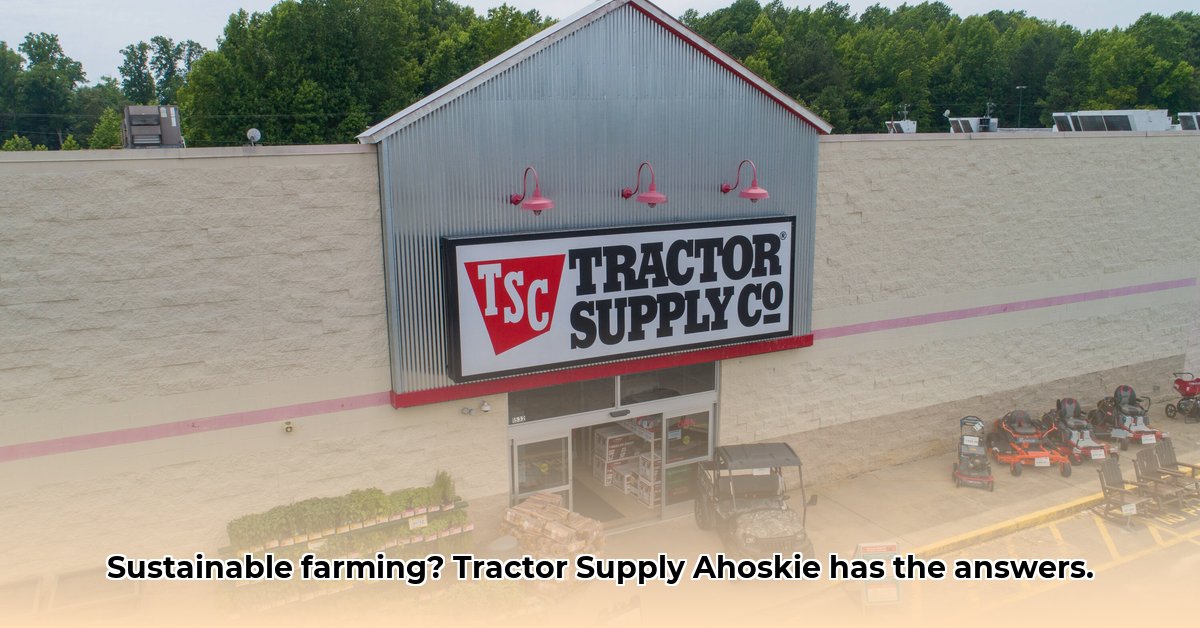
Tractor Supply Company (TSC) in Ahoskie, North Carolina, plays a vital role in supporting local agriculture. This article examines TSC's contribution to sustainable farming practices in Ahoskie, analyzing its current offerings, identifying limitations, and proposing concrete steps for improvement. The analysis considers the perspective of farmers, consumers, and TSC itself, outlining a collaborative approach to fostering a more environmentally conscious agricultural sector. For information on land clearing, see this helpful guide on clearing land.
TSC's Product Range and Accessibility
TSC Ahoskie provides a comprehensive range of agricultural supplies, from animal feed and fencing to tools and equipment. This wide selection serves the diverse needs of local farmers, improving accessibility to essential resources. The store's convenient location within Ahoskie eliminates the need for lengthy trips to procure supplies, boosting operational efficiency for local farmers. However, a crucial question remains: how effectively does this readily available product range support sustainable agricultural practices? Do the products themselves adequately reflect a commitment to environmental stewardship, or is there a significant gap?
Limitations and Opportunities for Growth
While TSC's accessibility is a significant benefit, a critical analysis reveals limitations concerning sustainability. Currently, a considerable portion of the store's inventory caters primarily to conventional farming methods. The availability of organic fertilizers, water-efficient irrigation systems, and biodiversity-supporting tools appears limited. This lack of robust sustainable offerings represents a missed opportunity to actively participate in the shift towards environmentally conscious agriculture. How can TSC bridge this gap and become a more active partner in creating a sustainable future for Ahoskie's farming community?
The Sustainability Gap: A Call for Change
The current product emphasis on traditional, often less sustainable practices constitutes a significant obstacle. It's analogous to possessing a comprehensive toolbox but lacking the specialized tools needed for environmentally responsible farming. This isn't merely a matter of a few missing products; it indicates a wider need for strategic re-evaluation of TSC's role in fostering sustainability. The potential for positive change, however, remains substantial.
Improving Sustainability: A Collaborative Approach
To drive progress, a collaborative approach is essential. This involves a three-pronged strategy: enhancing product offerings, empowering farmers through education, and fostering transparent communication regarding sustainability metrics.
Enhancing Product Offerings:
TSC could significantly enhance its contribution by expanding its sustainable product lines. Adding dedicated sections for organic fertilizers, water-efficient irrigation, and biodiversity-supporting tools would provide farmers with readily available alternatives to traditional, less sustainable options. This requires strategic sourcing of environmentally conscious products and perhaps a partnership with local suppliers to accommodate specific regional demands.
Empowering Farmers Through Education:
TSC can become a valuable educational resource. Organizing workshops, providing informational brochures, and collaborating with agricultural experts would empower farmers with knowledge of sustainable farming practices. This participatory approach fosters a sense of community ownership and encourages the adoption of environmentally responsible techniques. What educational formats would resonate most effectively with local farmers? This question requires careful consideration.
Promoting Transparency:
A critical aspect of sustainable progress is open communication. TSC should prioritize transparency regarding its sustainability metrics, including sourcing practices, packaging materials, and overall environmental footprint. This open approach fosters trust and builds credibility with consumers and farmers alike.
Actionable Steps for Stakeholders
To achieve these goals, a multi-faceted approach is necessary. Let's outline actionable steps for key stakeholders:
| Stakeholder | Short-Term Actions | Long-Term Actions |
|---|---|---|
| TSC Management | Conduct a life-cycle assessment (LCA) of key product lines. | Develop a comprehensive sustainability strategy with quantifiable targets; invest in employee training. |
| Small-Scale Farmers | Optimize input use, explore sustainable farming techniques. | Invest in water conservation and soil health practices; actively engage with TSC on sustainable product needs. |
| Consumers | Prioritize eco-friendly products; advocate for transparency. | Support local farmers and businesses committed to sustainability. |
| Local Government | Partner with TSC on educational initiatives. | Implement policies that support sustainable agriculture and incentivize eco-friendly farming; provide grants for sustainable practices. |
By implementing these strategies, TSC can play a pivotal role in advancing sustainable agriculture in Ahoskie, transforming its role from a simple supplier to an active partner in building a greener future. The success hinges on collaborative efforts, a commitment to environmental responsibility, and a willingness to adapt and innovate. The future of Ahoskie's agricultural landscape depends on it.
Key Takeaways:
- TSC Ahoskie offers essential agricultural supplies, but its contribution to sustainable farming practices needs enhancement.
- A collaborative approach—involving TSC, farmers, consumers, and local government—is crucial for promoting sustainability.
- Achieving sustainable agriculture in Ahoskie requires improvements in product offerings, farmer education, and transparency in sustainability metrics.